Copper peptides and wrinkle evidence
The most memorable percentage in this story describes how many subjects showed a biological response. That is a useful finding with a very specific meaning.
The procollagen comparison
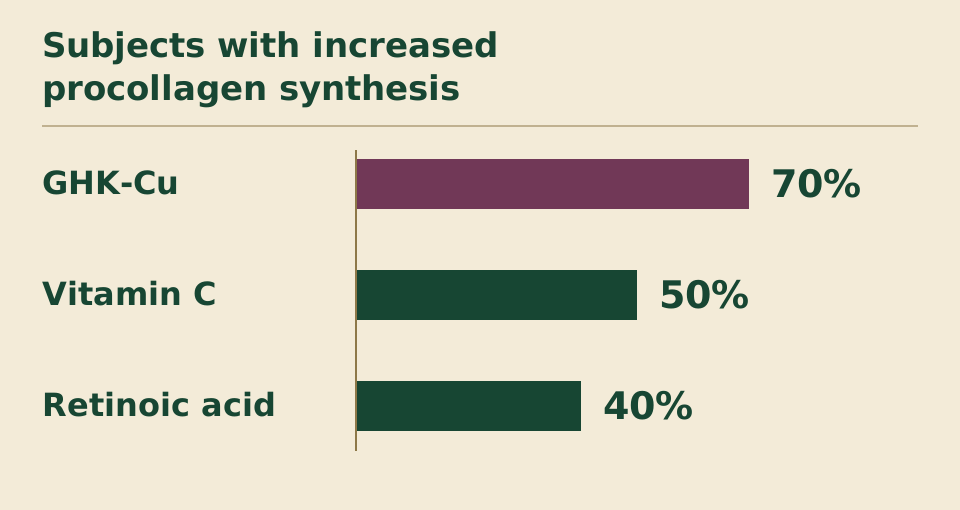
The review of topical GHK reports increased procollagen synthesis in 70% of GHK-Cu-treated subjects, compared with 50% for vitamin C and 40% for retinoic acid. Procollagen is a precursor in collagen production. The percentages describe the subjects showing an increase.
The ease with which that comparison can acquire a more dramatic meaning in the imagination troubles me. An increase occurring in a percentage of subjects and an increase of that percentage describe different things. The review reports the former. A reader looking for wrinkle reduction still needs a wrinkle outcome.
I regard the response comparison as a biological signal worth discussing, while leaving the size and visibility of any cosmetic effect to measurements designed to address them.
Skin appearance in the clinical review
The skin-regeneration review also reports placebo-controlled improvements in skin laxity, clarity, fine lines, wrinkle depth and density with topical GHK-Cu. These outcomes bring the discussion closer to what somebody looking in a mirror might actually mean by better skin.
Those findings have earned their place in the argument. Dismissing cosmetic research merely because a claim has been exaggerated elsewhere would be an easy way to miss something interesting. At the same time, the formulation and the measured endpoint are part of the result, as the more recent review of efficacy and delivery makes particularly clear.
At a mirror, I am especially conscious of the difference between an appearance and a measurement. When a claim concerns a change in wrinkle depth, I want the study's actual outcome in front of me rather than an attractive image standing in for it.

Comparing cosmetic outcomes
For a comparison to persuade me, it would have to follow the same visible outcome across clearly described formulations. The procollagen response figures help answer a question about a biological response. The clinical findings gathered in the skin review address a range of appearance and tissue outcomes. Combining them into a single ranking would lose the distinctions that make either useful.
I am therefore cautiously interested in the topical evidence and impatient with a universal winner. I would put greater weight on an argument about cosmetics that specified the preparation, the comparison, the outcome and the size of the change before reaching for a broad anti-aging description. Those are the missing connections I would look for in further clinical work.
The skin-barrier page covers another reason the preparation matters. For an even more distant view of the biology, the gene-expression essay examines the large claim that so often accompanies this peptide.